Learning to See: How Ghibli Taught a Generation of Western Fans to Love Quiet Anime Moments
Picture this: you're eleven years old, it's a Saturday afternoon, and someone — a cousin, a friend's older sibling, a Blockbuster Video employee who clearly had opinions — hands you a VHS copy of My Neighbor Totoro. Nothing explodes. Nobody powers up. The climax involves a giant magical cat bus and two small children crying in a field at dusk. And yet, somehow, you are completely destroyed by the time the credits roll.
If that scene sounds familiar, you've already lived the Ghibli effect. And if you're reading this on Kaze Hikaru Fukurou, there's a very good chance that experience is part of what turned you into the anime fan you are today.
Studio Ghibli didn't just make great movies. They fundamentally altered how a generation of Western viewers learned to watch animation — and by extension, how they learned to watch anime as a whole.
Light as Language
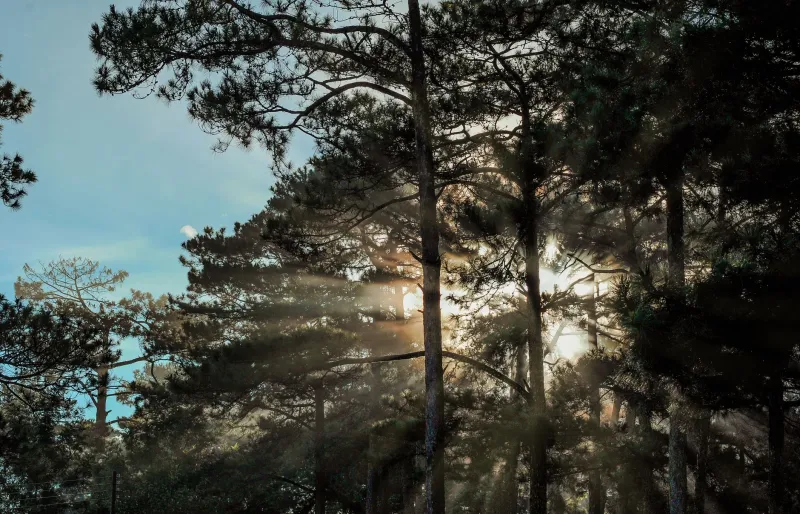
The most immediately recognizable element of Ghibli's visual identity isn't a character design or a color palette. It's light. Specifically, it's the way Ghibli films treat natural light as a narrative tool rather than simply an aesthetic choice.
In Nausicaä of the Valley of the Wind, toxic spores drift through shafts of filtered sunlight in a way that makes something dangerous feel heartbreakingly beautiful. In Spirited Away, the late-afternoon golden hour during which Chihiro's world transforms is so precisely observed that viewers who've never been to Japan still feel the specific weight of that moment — that particular quality of light that exists right at the edge of the ordinary becoming strange.
This is intentional and technical. Ghibli's background artists have always been extraordinarily skilled watercolorists, and the studio developed techniques for depicting atmospheric light — the way it scatters through leaves, bounces off water, pools in corners of rooms — that were genuinely unprecedented in animation at the time. Hayao Miyazaki and his collaborators, particularly the late Isao Takahata, understood that light isn't just illumination. It's emotional information.
For Western fans encountering this in the late '80s and '90s, it was revelatory. American animation of that era, even at its best, tended to use light functionally. Ghibli used it poetically.
The Radical Patience of Ghibli Pacing
Equally important — and arguably more influential on fan taste — is what industry folks sometimes call "ma" (間), the Japanese concept of meaningful negative space or pause. Ghibli films breathe. They linger. They'll hold on a scene of a character eating lunch, or watching rain, or simply walking through a field, for what feels like an eternity by conventional animation standards.
In My Neighbor Totoro, there's a sequence where Satsuki and Mei wait at a bus stop in the rain with Totoro. Almost nothing happens. It goes on for several minutes. It is, for many viewers, the emotional heart of the entire film.
For American kids raised on Saturday morning cartoons that cut every two seconds and needed something to explode every five minutes to maintain attention, this was genuinely disorienting at first. And then, usually pretty quickly, it became deeply comforting. Ghibli films taught Western audiences that it was okay — that it was actually better — to slow down and inhabit a moment rather than race through it.
This lesson stuck. Ask any long-term Western anime fan what they love about the medium, and a significant percentage will mention atmosphere, mood, and the ability of certain series to make them feel present in a world. That aesthetic preference has Ghibli's fingerprints all over it.
How the 'Ghibli Standard' Shaped Western Fan Expectations
By the time Princess Mononoke hit US theaters in 1997 through Miramax — with a marketing campaign that, bless their hearts, still tried to frame it as a straightforward action movie — a Ghibli-literate Western audience already existed. And that audience had developed what we might call the Ghibli Standard: an expectation that animated films could be visually sophisticated, emotionally complex, and narratively patient in ways that Hollywood animation rarely attempted.
This standard started bleeding into how Western fans evaluated anime more broadly. The late '90s and early 2000s boom in US anime fandom happened to coincide with this Ghibli-educated audience entering their teens and twenties. When they sought out more anime, they brought those visual expectations with them.
Series that prioritized atmosphere and visual craft — Haibane Renmei, Mushishi, early Neon Genesis Evangelion with its striking use of stillness and geometric composition — found devoted Western audiences partly because Ghibli had primed viewers to appreciate exactly those qualities. The fandom's well-documented love of "slice of life" as a genre is, at least in part, a downstream effect of Ghibli teaching people that quiet moments have value.
The Ripple Effect on Contemporary Production
It would be an overstatement to say Ghibli directly influenced every anime studio's visual approach. But the studio's impact on fan taste has absolutely created market pressure that contemporary productions respond to. When shows like A Silent Voice, The Garden of Words (Makoto Shinkai's entire filmography, really), or Violet Evergarden receive rapturous reception in Western markets, it's partly because they're speaking a visual language that Ghibli helped Western audiences learn to understand and value.
The sakuga appreciation community — fans who closely follow specific animators and celebrate exceptional sequences of animation — is another manifestation of this same impulse. The Ghibli effect didn't just change what Western fans watch. It changed how carefully they watch.
What It Means to Chase the Light
There's a reason the word "light" is woven into the name of this site. Light, in the Ghibli sense, isn't just photons bouncing off surfaces. It's the quality of attention a story pays to the world it inhabits. It's the choice to treat a shaft of afternoon sun through a window as worth stopping for, worth rendering with care, worth giving the audience time to feel.
Ghibli taught Western fans to chase that light — to seek out anime that treats its world with the same loving attention. That pursuit has shaped entire fandom communities, influenced what gets licensed and localized, and quietly elevated the visual conversation around animation as an art form in the US.
Not bad for a studio that once made a whole movie about a pig who flies airplanes.