Feathers in the Dark: The Surprising Depth of Owl Characters Across Anime
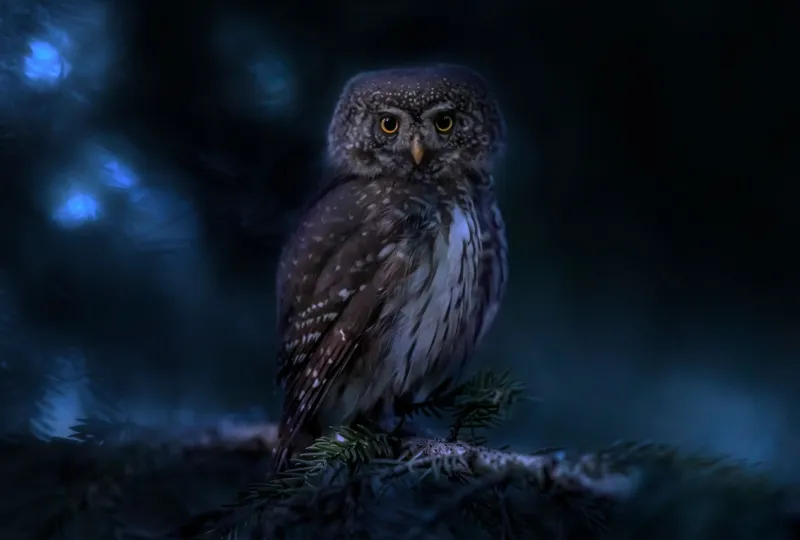
There's something undeniably cinematic about an owl appearing in an anime scene. The slow turn of a feathered head, those enormous unblinking eyes catching the moonlight — it's the kind of image that tells you, without a single line of dialogue, that something significant is happening here. Owls don't show up in anime by accident. They're loaded, every single time.
At Kaze Hikaru Fukurou, owls aren't just part of our name — they're a lens through which we think about storytelling. So naturally, we've spent way too many late nights cataloguing how these birds show up across anime and manga, and what their presence actually means for character dynamics, theme, and narrative structure. Buckle up, because this goes deeper than you might expect.
The Wise Elder Trope — And Why It Works
The most familiar version of the anime owl is the mentor figure. Think of the small, round-eyed creature perched on a wizard's shoulder, or the spirit guide who offers cryptic advice before disappearing into the night. This archetype draws from a long tradition in Japanese folklore, where owls — called fukurou (フクロウ) — are associated with luck, wisdom, and foresight. The word itself contains a pun: fu-ku-rou can be parsed to mean "no hardship will come," which is why owl charms are common gifts in Japan, especially around exam season.
Anime leans hard into this symbolism. Owl-adjacent mentor characters — sometimes literally owls, sometimes humans coded with owl imagery — tend to speak in riddles, appear at pivotal moments, and withhold just enough information to keep the protagonist (and the audience) guessing. They're not always warm. Often they're detached, even cold. But their guidance, however frustrating, tends to be accurate.
What makes this trope compelling rather than clichéd is that the best owl-coded mentors in anime aren't infallible. Their wisdom is real, but it's incomplete. They see more than others, yes — but seeing isn't the same as understanding everything.
When the Wise Bird Turns Trickster
Here's where things get genuinely interesting. Japanese storytelling has a rich tradition of the yokai trickster — supernatural beings who blur the line between helpful and harmful. Owls fit neatly into this category too, and some of the most compelling owl characters in anime exploit exactly that ambiguity.
Consider how often an owl-coded character in a darker series turns out to be manipulating events from the shadows. They offer wisdom, sure — but wisdom in service of their own agenda. The information is real, the guidance is technically accurate, but the framing is a trap. This is the owl as antihero, and it's a dramatically richer version of the archetype.
This duality — the guide who is also a deceiver — resonates with older owl mythology from across Asia, where the bird's nocturnal nature made it as associated with the hidden and the dangerous as with the wise. In some regional Japanese traditions, owls were considered omens rather than blessings. Anime writers clearly know this tension exists, and the best of them play both sides of it simultaneously.
How Western Fans Read Owl Characters Differently
For American audiences raised on Harry Potter's Hedwig and Tolkien's messenger birds, owls tend to land as straightforwardly positive symbols. We've been culturally trained to see them as noble, reliable, associated with academia and intelligence. So when a Western fan encounters an owl character in anime who turns out to be morally grey — or outright villainous — it tends to hit harder than intended.
That gap in expectation is actually part of what makes owl characters so effective for international audiences. The betrayal of the "wise mentor" expectation carries extra emotional weight precisely because we walked in trusting the bird. Anime writers, whether intentionally or not, benefit from this cross-cultural assumption.
There's also something worth noting about how owl design differs across anime genres. In shonen and isekai series, owl companions tend to be round, soft, almost chibi in appearance — maximizing the trustworthy mentor vibe. In darker psychological series or seinen works, owl imagery gets sharper, more angular, with an emphasis on those unsettling forward-facing eyes. The visual language is doing a lot of heavy lifting before a single word of dialogue lands.
Animal Symbolism as Narrative Shorthand
Zooming out, the owl is just one piece of a much larger system. Anime uses animal symbolism with a precision that Western animation rarely matches. Foxes (kitsune) signal deception and transformation. Wolves suggest loyalty or isolation depending on context. Crows mark death or intelligence. Owls sit at the intersection of wisdom and mystery, which makes them uniquely versatile.
What's fascinating is how quickly a viewer learns to read these signals after enough anime exposure. It becomes almost instinctive — you see an owl motif on a character's clothing, or an owl silhouette in the background of a key scene, and something in your brain flags it. Pay attention. This character knows more than they're letting on.
That's genuinely elegant storytelling. It's using a shared symbolic vocabulary to communicate character information without exposition. And it rewards the kind of attentive, engaged viewing that anime fandoms tend to cultivate.
The Owl as a Mirror for the Audience
Maybe the most underrated dimension of the owl archetype is what it says about the audience. Owl characters attract viewers who value knowledge, who are comfortable with ambiguity, who don't need their moral lines drawn in bright primary colors. The owl's appeal is fundamentally about respecting the audience's intelligence.
In a medium that sometimes gets criticized for spelling everything out, an owl character who speaks in half-truths and lets the viewer fill in the gaps is a statement of confidence. It says: you're smart enough to follow this. For otaku audiences who've been navigating complex lore and layered narratives for years, that kind of trust feels like a gift.
So the next time an owl shows up in whatever you're watching — whether it's a tiny feathered familiar or a human character who just happens to have those knowing, unreadable eyes — take a moment to appreciate the depth behind the design choice. There's almost certainly more going on than the surface suggests.
That's the thing about owls. They're always watching. And they're usually right.